Optimizing Workflows with Apache Airflow 3's Task Execution Interface
Apache Airflow 3 introduces the Task Execution Interface, a pivotal feature that enhances workflow optimization. This article explores its impact on task management, security, and deployment across diverse environments.
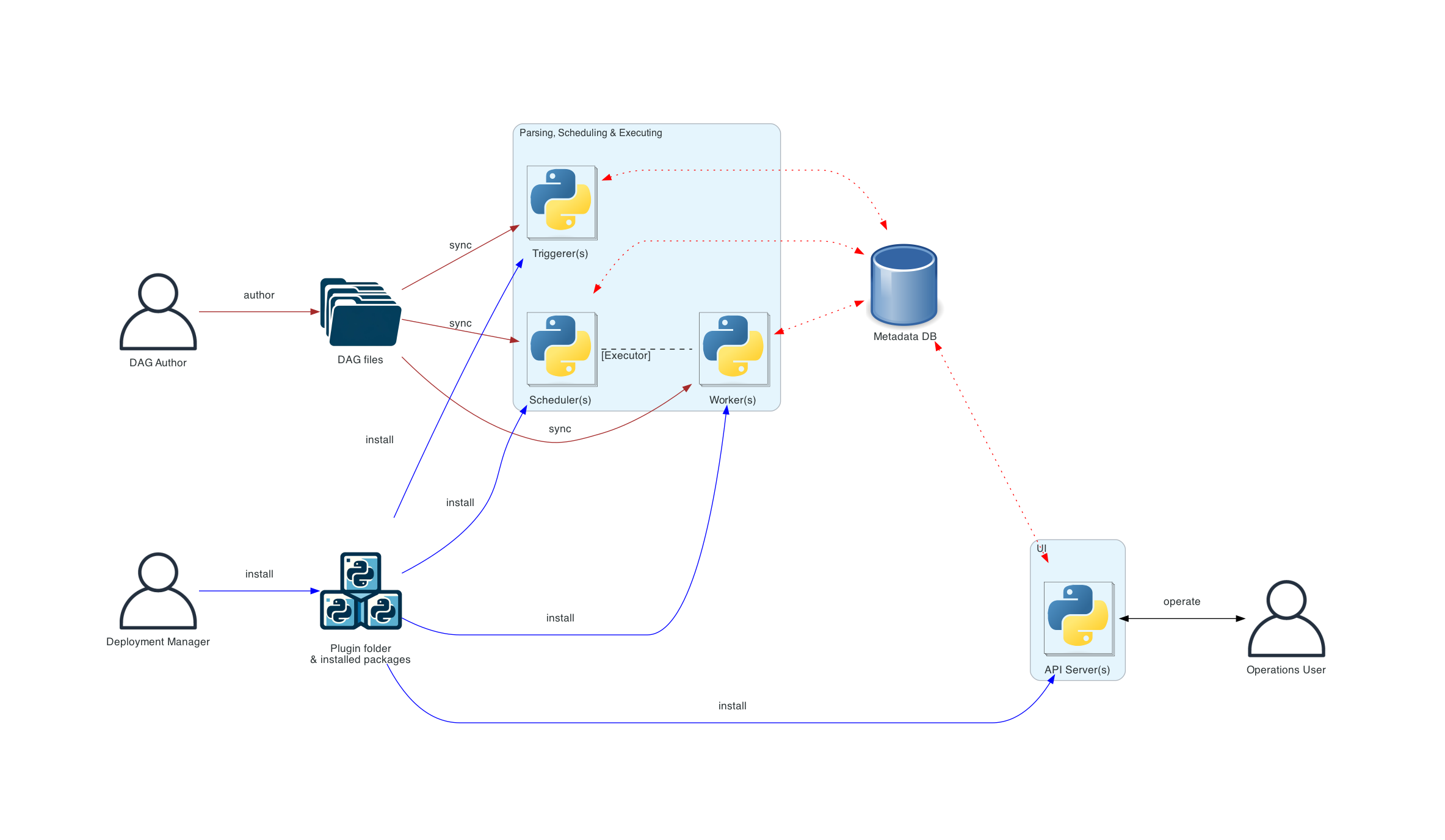
Apache Airflow 3 has introduced several features that significantly enhance the way workflows are managed, with the Task Execution Interface (TEI) standing out as a transformative addition. This interface is designed to optimize task execution by providing a more secure and scalable framework for running tasks across various environments, including multi-cloud and hybrid-cloud setups. For engineers dealing with complex data pipelines, understanding and leveraging the TEI can lead to more efficient and reliable workflows.
Why the Task Execution Interface Matters
In traditional Airflow setups, tasks are executed using operators that directly interact with the underlying infrastructure. This approach, while straightforward, often leads to challenges in scaling and securing workflows, especially as they grow in complexity and size. The TEI addresses these issues by abstracting task execution into a more flexible and secure model. This abstraction not only enhances security by isolating execution environments but also allows for better resource management and scalability across different cloud providers and on-premises systems [6].
Understanding the Task Execution Interface
The Task Execution Interface in Airflow 3 is part of a broader architectural shift aimed at decoupling task execution from the core Airflow components. This decoupling is achieved through the introduction of Task SDKs, which provide a standardized way to define and execute tasks. These SDKs enable tasks to be executed in isolated environments, ensuring that security and resource constraints are maintained independently of the Airflow scheduler or web server [6].
The TEI also supports event-driven scheduling, allowing workflows to react to external events and data changes in real-time. This capability is particularly useful for integrating with messaging systems and other event sources, making Airflow a more dynamic and responsive orchestration tool [6].
Implementing the Task Execution Interface
To leverage the TEI, you begin by defining tasks using the Task SDKs. These SDKs provide a set of APIs that abstract the execution details, allowing you to focus on the logic of your tasks rather than the underlying infrastructure. Here’s a simple example of how you might define a task using the Task SDK:
from airflow.sdk import Task

class MyTask(Task):
    def execute(self, context):
        # Task logic here
        print("Executing task with context:", context)
In this example, MyTask is a custom task that inherits from the base Task class provided by the SDK. The execute method contains the logic that will be run when the task is executed. This method can access the execution context, which includes information about the current run, such as parameters and execution date [4].
Common Mistakes and Pitfalls
One common mistake when implementing the TEI is neglecting to properly configure the execution environment. Since tasks are executed in isolated environments, it’s crucial to ensure that all dependencies and configurations are correctly specified. Failing to do so can lead to runtime errors or unexpected behavior. Additionally, engineers often underestimate the complexity of managing task dependencies and data flows in a distributed setup, which can lead to performance bottlenecks or data inconsistencies [1][5].
Another pitfall is not fully utilizing the event-driven capabilities of the TEI. By integrating with external event sources, you can create more responsive and efficient workflows. However, this requires careful planning and configuration to ensure that events are handled correctly and do not overwhelm the system [6].
When to Use the Task Execution Interface
The TEI is particularly beneficial in environments where security and scalability are paramount. If your workflows require execution across multiple cloud providers or need to handle sensitive data securely, the TEI provides the necessary isolation and control. However, for simpler workflows that run entirely within a single environment, the overhead of setting up and managing the TEI might not be justified.
In conclusion, the Task Execution Interface in Apache Airflow 3 offers a powerful tool for optimizing workflow execution. By abstracting task execution and supporting event-driven scheduling, it enables more secure, scalable, and responsive workflows. As with any technology, understanding the underlying concepts and potential pitfalls is key to successful implementation and operation [6].
- Best Practices — Airflow 3.2.1 Documentationhttps://airflow.apache.org/docs/apache-airflow/stable/best-practices.html
- Best Practices — Airflow Documentationhttps://airflow.apache.org/docs/apache-airflow/2.0.1/best-practices.html
- UI Overview — Airflow 3.2.1 Documentationhttps://airflow.apache.org/docs/apache-airflow/stable/ui.html
- Tasks — Airflow 3.2.1 Documentationhttps://airflow.apache.org/docs/apache-airflow/stable/core-concepts/tasks.html
- Architecture Overview — Airflow 3.2.1 Documentationhttps://airflow.apache.org/docs/apache-airflow/stable/core-concepts/overview.html
- Apache Airflow® 3 is Generally Available! | Apache Airflowhttps://airflow.apache.org/blog/airflow-three-point-oh-is-here/
- Dags — Airflow 3.2.1 Documentationhttps://airflow.apache.org/docs/apache-airflow/stable/core-concepts/dags.html
- Scheduler — Airflow 3.2.1 Documentationhttps://airflow.apache.org/docs/apache-airflow/stable/administration-and-deployment/scheduler.html
Be the first to comment
One email a morning. The day's playbooks for you.
Pick the categories you care about (or leave blank for everything). The digest is ranked by what you've actually been reading on this device, so it sharpens over time.