Stop Pitching the Upside of Your Architecture
Reading Daniel Kahneman's "Thinking, Fast and Slow", completely transformed how I approach technical pitches and leadership buy-in. He proved that human beings are hardwired for loss aversion, meaning the psychological pain of losing something hurts twice as much as the pleasure of a gain. If you want to stop stakeholders from defending failing legacy systems, you have to stop selling the upside of the future and start highlighting the active bleed of the present.
Go deeper2 min

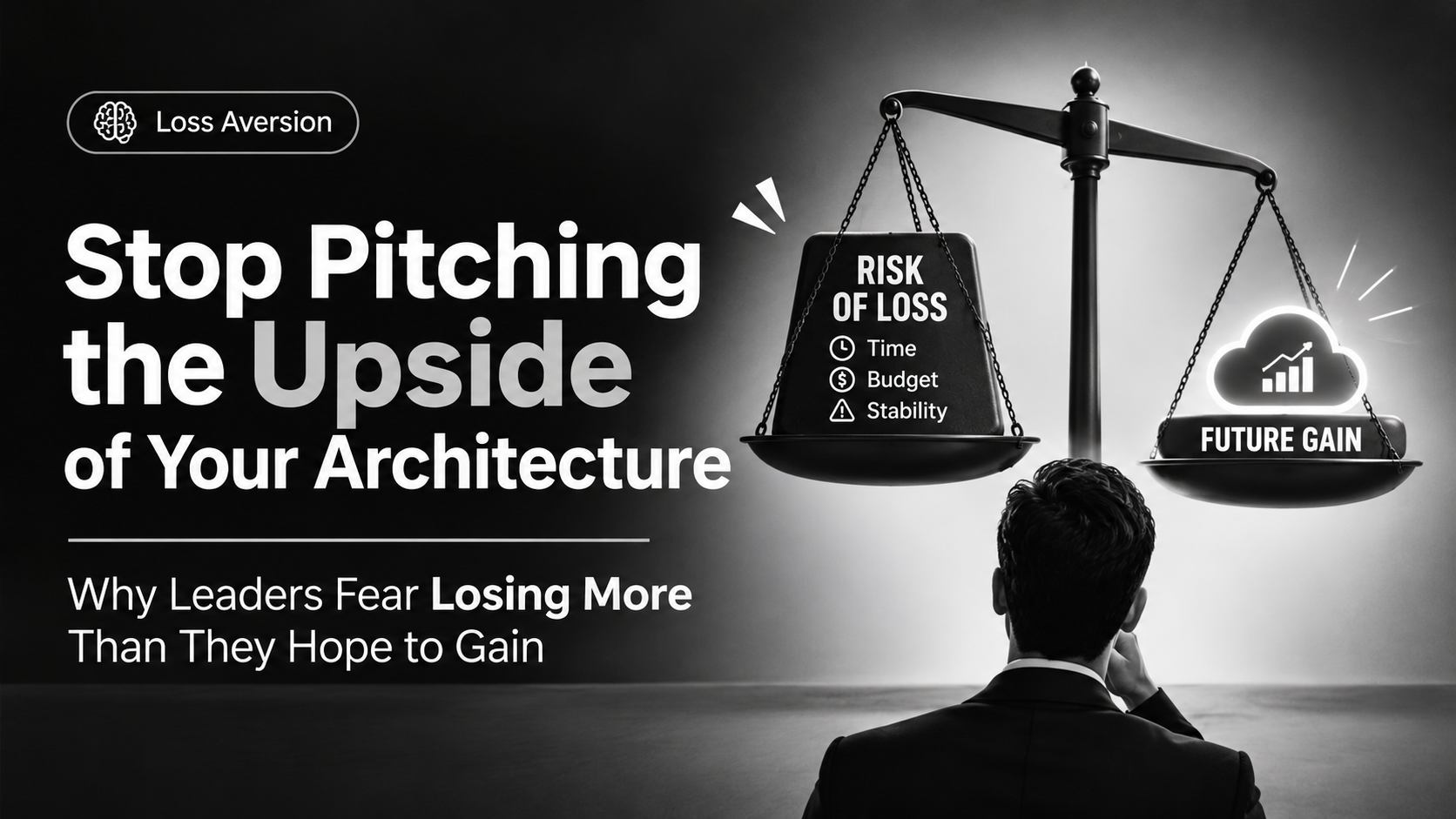
If you want leaders to approve a new data platform, stop telling them how great the future will be.
Stop Pitching the Upside of Your Architecture
If you want leaders to approve a new data platform, stop telling them how great the future will be.
The Big Idea
Nobel-winning psychologist Daniel Kahneman proved a simple rule about human behavior: Losing hurts twice as much as winning feels good.
When you pitch a new architecture, you are pitching a "win." But your stakeholders are not looking at the upside. They are terrified of what they might lose, budget, time, or the stability of their current dashboards. To them, the current system feels safe, and your new idea feels like a gamble.
Why It Matters
Because humans hate losing, we naturally cling to the status quo.
When you tell a stakeholder, "This new tool will make our pipelines 30% faster," their brain instantly translates that to: "This migration is risky, expensive, and might break the reports I rely on." The perceived risk heavily outweighs the promised reward.
The Solution
To get buy-in, you must make the current baseline feel painful. Stop selling the upside and start highlighting the active bleed.
- Don't sell the gain: "Migrating to Microsoft Fabric will save us 30% on compute costs."
- Frame the loss: "Our legacy setup actively wastes 30% of our compute budget every month. We lose that cash every single day we delay this upgrade."
Make doing nothing feel like an active, ongoing loss.
Go deeperThe full details behind this post, with sources.
Inside: Go Deeper: Spotting and Breaking the Trap
OpenClose
The full details behind this post, with sources.
Inside: Go Deeper: Spotting and Breaking the Trap
Go Deeper: Spotting and Breaking the Trap
Before you use loss aversion to sell your ideas, you have to ensure it is not silently sabotaging your own engineering decisions.
How to know you are trapped: You are caught in a loss aversion loop if your primary reason for continuing a project is how much time or money you have already spent. If you catch yourself saying, "We already put six months into building this custom API," rather than, "This API is the best solution for our future," you are defending a loss.
How to break free: You cannot turn off human nature, but you can bypass it using two mental resets:
- The Outsider Test: Ask yourself, "If I quit today and a new Lead Data Engineer took my job tomorrow, what is the first thing they would kill?"
- The Example: Your team spends 10 hours a week patching an old, buggy in-house scheduling tool. A new hire with zero emotional attachment would instantly scrap it for a modern, automated alternative. If an outsider would kill it, your attachment is purely emotional. Kill it yourself.
- The Clean-Slate Test: Pretend you do not already own the asset or project. Ask, "Knowing what I know now, would I spend current cash and time to start this today?"
- The Example: You are halfway through a messy cloud migration with a specific vendor, and it is failing. If you had a clean slate today, would you choose that same vendor again? If the answer is no, staying the course is just fear of admitting a loss. Cut ties and pivot.
This same psychology applies to selling software, services, or even your own consulting rates.
People buy when the pain of staying the same becomes greater than the pain of changing. Here is how to use loss aversion to close deals:
Sell the invisible cost: Never just list your product's features. Show the prospect exactly what it costs them to live without it. Instead of pitching "Our software saves your team 10 hours a week," pitch "Your team is currently losing 10 hours of billable time every week to manual data entry."
The "Free Trial" trap: This is why 30-day free trials are the ultimate sales tool. Once a user has your software on their machine, their brain takes psychological ownership of it. When day 30 hits, canceling no longer feels like saving money, it feels like having something taken away.
Frame your pricing: People absolutely hate feeling penalized. A "late fee" triggers intense loss aversion and angers customers. But an "early payment discount" triggers the pleasure of a gain. The final math is exactly the same, but the psychological framing dictates whether the buyer feels cheated or clever.